Du siehst einen Samen? Ich sehe einen Apfelbaum!
Über Gideon, Abraham und Jesus als unser Gärtner.
(35min)

Hier kannst du mehr über den verborgenen Samen der Herrnhuter lesen.

Du siehst einen Samen? Ich sehe einen Apfelbaum!
Über Gideon, Abraham und Jesus als unser Gärtner.
(35min)
Hier kannst du mehr über den verborgenen Samen der Herrnhuter lesen.

Es ist kompliziert. Und es gibt viele Meinungen dazu.
Fangen wir mit Elaine Aron an. Sie nannte dieses Persönlichkeitsmerkmal highly sensitive, und in ihren wissenschaftlichen Veröffentlichungen inzwischen auch Sensory-Processing Sensitivity (SPS). Ihr ist vor allem wichtig, dass dieses Merkmal angeboren ist – und sogar bei Tieren nachgewiesen werden kann. Im wissenschaftlichen Bereich gibt es tatsächlich noch eine Unmenge anderer Begriffe, die inhaltlich das gleiche Konzept beschreiben: Environmental Sensitivity, Orchids and Dandelions, Differential Susceptibility …
Auf Deutsch haben verschiedene Autoren verschiedene Begriffe verwendet (z.B. auch hypersensibel oder hypersensitiv). Es gibt sogar Autoren, die einen Unterschied machen zwischen hochsensibel und hochsensitiv – hochsensibel für sensorische Sensibilität und hochsensitiv für empathische und spirituelle Sensibilität. Ihr Ansatz geht in die esoterische Richtung, sie kombiniert hochsensitiv mit Vorahnung und sechster Sinn. Dabei finde ich wichtig, zwischen meinen „Ahnungen“ und „geistlichen Eindrücken“ zu unterscheiden – das eine kommt aus der eigenen Intuition, das andere etwas, das von Gott kommt. (vgl. Johannes Hartl: Hochsensibel oder prophetisch?). Hochsensibel als einheitlichen Begriff mit verschiedenen Ausprägungen zu verwenden klingt für mich ganzheitlich – Körper und Gefühle und Geist sind sehr stark miteinander verbunden, aber nicht gleich.
Der englische Begriff sensitive heißt auf Deutsch „sensibel“. Der deutsche Begriff sensitiv ist eher ein Fachwort und wird deutlich seltener benutzt. Das englische Wort sensible bedeutet dagegen etwas ganz anderes, es geht eher in die Richtung von „sinnvoll, vernünftig“. Also bitte nicht in „highly sensible person“ zurück übersetzen!
Manche deutsche Autoren bevorzugen hochsensitiv, weil „sensibel“ für sie zu negativ konnotiert ist – wie in „du bist viel zu sensibel“ oder sogar „ein Sensibelchen“. Kann ich nachvollziehen. Aber inhaltlich bleibt es das gleiche Konzept – deshalb bringt die Umbenennung meiner Meinung nach nicht viel. Im Gegenteil, der Duden definiert sensitiv als „überempfindlich“ – klingt negativer als sensibel! Das Wort sensitiv macht aber gerade einen Bedeutungswandel durch, es wird heute deutlich häufiger verwendet als vor 30 Jahren – nicht nur bei Shampoos.
Für mich sind hochsensibel und hochsensitiv einfach Synonyme. Ich benutze eher das Wort hochsensibel, weil es gesellschaftlich gebräuchlicher geworden ist – aber es ist Geschmackssache.

Die Wolke hinter der Word Cloud wurde von Gemini generiert, Prompt: „underlay the words in the attached image with a cloud (of similar shape) and blue sky around/behind. This is supposed to be a pun (because it’s a word cloud) but also to illustrate the word confusion (like mist).“ ChatGPT hat den gleichen Prompt komplett missverstanden und ließ sich auch nicht von mir korrigieren.

Hast du schon mal versucht, mit einem Zweijährigen gemeinsam Wäsche aufzuhängen? Sicherlich dauert es länger als es alleine zu machen. Aber indem ich meinem Sohn zutraue, seine Fähigkeiten einzusetzen – auch wenn er es längst nicht so gut kann wie ich – und ich ihm immer wieder zeige, wie es funktioniert, fühlt er sich „schon groß“ und lernt viel mehr, als wenn er nur zuschauen würde. Genauso kann er bereits mit-beten und mit-lobpreisen. Gott sieht sein wachsendes Herz, nicht das Endergebnis.
Das ist kein Zufall. Familie ist Gottes Strategie für Jüngerschaft – Gott fängt gerne klein an. Das zieht sich durch die ganze Bibel:
Und dann kommt Jesus. Er redet nicht nur über Familie – er definiert sie neu:
Auf jeder Ebene läuft dasselbe ab – in der Ehe, der Kernfamilie, der Gemeinde, Gottes großer Familie: Wir lernen, jemanden zu lieben, den wir uns nicht ausgesucht haben. Wir üben Vergebung. Wir wachsen an dem, was uns unterscheidet. Es ist dasselbe Muster in immer größeren Kreisen.
Und dazu gehört selbstverständlich, dass wir als Familien gemeinsam Gott in der Mission dienen. Gemeinsam hängen wir die Wäsche auf, beten für unsere Nachbarn und ermutigen Menschen hier in Hainichen. Groß und Klein bringen, was sie haben, und Gott lässt es wachsen. Schritt für Schritt.
(Diesen Text habe ich für einen Newsletter von Jugend mit einer Mission Hainichen geschrieben.)

Bild ist generiert von Gemini, Prompt: A chubby toddler hand gripping a small white sock at the middle, held up toward a clothesline, while a large adult hand (male, 40 years old) gently opens a wooden clothespin to clip it on – not taking over, just making it possible. The contrast between the two hands tells the story: small and large, unsteady and steady, learning and teaching. Soft warm morning light falls across both hands. In the slightly blurred background, a clothesline with laundry already hanging and swaying in a gentle breeze – fruit of work already done. The mood is patient, tender, full of quiet purpose. Photorealistic, landscape orientation, shallow depth of field, close-up shot.
Have you ever tried hanging up laundry with a two-year-old? It definitely takes longer than doing it alone. But by believing in my son’s ability to use his skills—even though he’s nowhere near as good at it as I am—and showing him over and over again how it works, he feels like a big kid already and learns so much more than if he were just watching. In the same way, he can already join in prayer and worship. God sees his growing heart, not the end result.
That’s no coincidence. Family is God’s strategy for discipleship—God loves to start small. This theme runs through the whole Bible:
And then comes Jesus. He doesn’t just talk about family—he redefines it:
The same thing happens at every level—in marriage, the nuclear family, the church, God’s great family: We learn to love someone we didn’t choose. We practice forgiveness. We grow through our differences. It’s the same pattern in ever-widening circles.
And of course that includes serving God in mission together as families. Together we hang the laundry, pray for our neighbors, and encourage people here in Hainichen. Young and old bring what they have, and God makes it grow. Step by step.
(I have written this text for a newsletter of Youth With A Mission Hainichen.)
Bild ist generiert von Gemini, Prompt: A chubby toddler hand gripping a small white sock at the middle, held up toward a clothesline, while a large adult hand (male, 40 years old) gently opens a wooden clothespin to clip it on – not taking over, just making it possible. The contrast between the two hands tells the story: small and large, unsteady and steady, learning and teaching. Soft warm morning light falls across both hands. In the slightly blurred background, a clothesline with laundry already hanging and swaying in a gentle breeze – fruit of work already done. The mood is patient, tender, full of quiet purpose. Photorealistic, landscape orientation, shallow depth of field, close-up shot.

Was bedeutet es, nach dem Ebenbild Gottes geschaffen zu sein? Vielleicht denken wir an einen Fotokopierer: eine Kopie soll das Original-Dokument so genau wie möglich wiedergeben, um die Autorität des Originals zu bezeugen. Aber das biblische Wort tselem, das in diesem Zusammenhang verwendet wird (1. Mose 1,26), spricht von einer Statue: Damals war es üblich, dass Könige Statuen von sich in ihrem ganzen Reich aufstellten. Diese Statuen machten für alle sichtbar, wer hier regiert. Die Betonung liegt also nicht darauf, dass alle Ebenbilder gleich aussehen, sondern auf welchen König sie hinweisen.
Gott als König hat der Menschheit einen Auftrag gegeben: über die Erde zu herrschen, so wie er es tut, nach seinem Wesen. Dafür hat er jeden Mann und jede Frau mit unterschiedlichen Gaben und Bedürfnissen ausgestattet. Und weil wir verschiedene Stärken und Schwächen haben, brauchen wir einander – wir können diesen Auftrag nur gemeinsam erfüllen.
Dieser Auftrag ist also von Anfang an als Gemeinschaftsprojekt angelegt – wir brauchen Vielfalt in Einheit. Vielfalt kann sich bedrohlich anfühlen: Wie viele Konflikte entstehen einfach dadurch, dass wir verschieden sind! Und doch ist genau diese Vielfalt und dieses Aufeinander-Angewiesensein Gottes perfektes Design. Es ist das Lernfeld, in dem unsere Beziehungen im Feuer des Alltags geläutert und geprüft werden. Wer schon einmal eng mit Menschen zusammengearbeitet hat, die ganz anders sind als man selbst (vielleicht sogar mit dem Ehepartner) weiß, wie herausfordernd das ist. Einander bedingungslos annehmen, gemeinsam für etwas Größeres eintreten – das klingt gut, bis es schwierig wird.
Wie schwer es ist, in Einheit zu bleiben, selbst wenn wir uns dafür entschieden haben! Das ist kein Zufall. Es geht um Gottes Projekt, und darum macht es Sinn, dass wir ihn brauchen, um es umzusetzen. Unsere Autorität ist delegiert – das bedeutet, unser Einfluss in der Welt ist nur so real wie unsere Abhängigkeit von ihm. So wollen wir als Jugend mit einer Mission sein: unterschiedlichste Menschen, vereint unter einem König, die seine Herrschaft auf der Erde sichtbar machen.
(Diesen Text habe ich für einen Newsletter von Jugend mit einer Mission Hainichen geschrieben.)

Das Bild wurde erstellt von Gemini, Prompt: A cartoon-style illustration of Adam and Eve standing confidently in a lush, vibrant Garden of Eden. They are dressed in simple but dignified clothing, like a king and queen of nature – with woven flower crowns suggesting gentle authority. Animals of all kinds gather around them naturally and peacefully – lions, elephants, birds, deer. Adam and Eve are not dominating the animals, but caring for them, one hand gesturing outward as if overseeing the garden. The composition feels warm and full of life. The art style is colorful and friendly, like a high-quality animated film – detailed linework, dreamlike landscapes, soft color washes. Sophisticated and slightly otherworldly – fits the „garden before the fall“ atmosphere well. Light rays filter through tall trees in the background, suggesting the presence of something greater behind the scene. The overall mood is: responsible stewardship, dignity, belonging, and purpose.
What does it mean to be created after the image of God? We may think of a photo copy machine that creates a copy of the original document as exact as possible, in order to testify of the authority of the original document. However, the biblical word tselem used in this context (Genesis 1:26) rather speaks of a statue: it was customary that a king of these times would place statues in his entire empire. These statues make publicly visible who is reigning in this place. So the emphasis here is not that every image looks the same, but to which king they point at.
This king gave a commission to all humanity to rule the earth in his stead, in his likeness. For that, he created every man and every woman with different giftings and needs. And because we have these diverse strengths and weaknesses, we need each other – it’s only together that we can fulfil his commission.
So this commission was a community project all along – we need diversity in unity. Unity might feel like a threat: How many conflicts simply arise because we are different! Yet, our diversity and our need for one another is God’s perfect design. It is the arena in which our relationships are refined and tested in the crucible of everyday life. If you’ve ever tried to work closely with people who are very different from you (maybe even your spouse), you already know how hard this is. Accepting each other unconditionally, teaming up for something bigger than ourselves – it sounds great until it isn’t.
How hard it is to stay united even when we want to! That’s not a coincidence. This is God’s project, and it makes sense that we’d need him to pull it off. Our authority is delegated – which means our impact in this world is only as real as our dependence on him. That’s the kind of community Youth With A Mission wants to be: diverse people, united by one king, making his reign visible on earth.
(I have written this text for a newsletter of Youth With A Mission Hainichen.)
Image generated by Gemini, with the prompt: A cartoon-style illustration of Adam and Eve standing confidently in a lush, vibrant Garden of Eden. They are dressed in simple but dignified clothing, like a king and queen of nature – with woven flower crowns suggesting gentle authority. Animals of all kinds gather around them naturally and peacefully – lions, elephants, birds, deer. Adam and Eve are not dominating the animals, but caring for them, one hand gesturing outward as if overseeing the garden. The composition feels warm and full of life. The art style is colorful and friendly, like a high-quality animated film – detailed linework, dreamlike landscapes, soft color washes. Sophisticated and slightly otherworldly – fits the „garden before the fall“ atmosphere well. Light rays filter through tall trees in the background, suggesting the presence of something greater behind the scene. The overall mood is: responsible stewardship, dignity, belonging, and purpose.
For if you live according to the flesh you will die,
but if by the Spirit you put to death the deeds of the body, you will live.
Romans 8:13 (ESV)
What does the word „flesh“ mean in the Bible? This question has been bothering me for many years now. One the one hand, „flesh“ talks about our temptations – we tend to go back to our bad habits from the past, especially in stressful situation. We hope that our coping strategy that gave us some short-time relief will work again, like an addict that longs for the next shot. On the other hand, „flesh“ also talks about our normal human condition – our body is made of flesh. God made us by taking dust to form our flesh, then breathing his life into it. So it is normal, humanly speaking, to fail, to follow the sin of our previos generations.
So which one is it, is „flesh“ a spiritual principle, or simply the „human way“? Is it someone tempting us, or is the Evil already inside of our heart? The Bible always puts flesh in the contrast: „Obey the spirit or obey your flesh.“, i.e. obey God’s way or obey Satan’s way of doing things. This means, probably it is both – it is a power beyond our human control, but still, it is our responsibility to choose Good instead of Evil.
Maybe that’s why the Bible is using this metaphor „flesh“. Both the human and the spiritual side are implied. Of course it’s totally understandable: You are human flesh. Your behavior will reflect his. However, you don’t have to stay there. You cannot go out of your body, but you can learn to behave in a new way, the spirit way.
Recently, the Bible paraphrase „The Voice“ of the verse above helped me to grasp this paradox a little bit better:
For if your life is just about satisfying the impulses of your sinful nature [flesh], then prepare to die.
But if you have invited the Spirit to destroy these selfish desires, you will experience life.
Romans 8:13
It’s as if Paul is writing here:
You really believe doing what your instincts tell you is bringing life? You might really want to … and NOW. I get it. It might even feel good for that moment. But: prepare to die. In the light of death, all these pleasures or refuge places become meaningless. In a way, when you give in to these tempations, you are already dead. Because you are walking on the path that leads to death. It might be the broad, „normal“ path. But remember: You will die.
Now consider the alternative: You are a child of God. His Spirit is inside of you, ready and willing to teach you a new lifestyle. The question is: Do you listen? He has a much better way of doing things, you know. And yes, you are still human, but you are part of a new family now. You belong to this new life, a life that overflows into eternity. That’s your heritage. It already belongs to you. Now, whenever you choose to follow that new, narrow path, you are already alive, more alive then ever.
So – it’s our choice. Which path will we walk?
It feels like God whispering to us:
Don’t forget: Living fully in the spirit means to be fully human, like Jesus lived as „renewed human“, like Adam and Eve lived as „humans in his original design“. You don’t have to take off your body like you take off a coat. I will renew your body! No, just don’t trust every instinct, because Sin is more deeply rooted inside of you than you think. Your gut feeling might be correct, but it also might be a little out of tune, in subtle but important ways.
Trust me to sort that out. I am teaching you how to live.
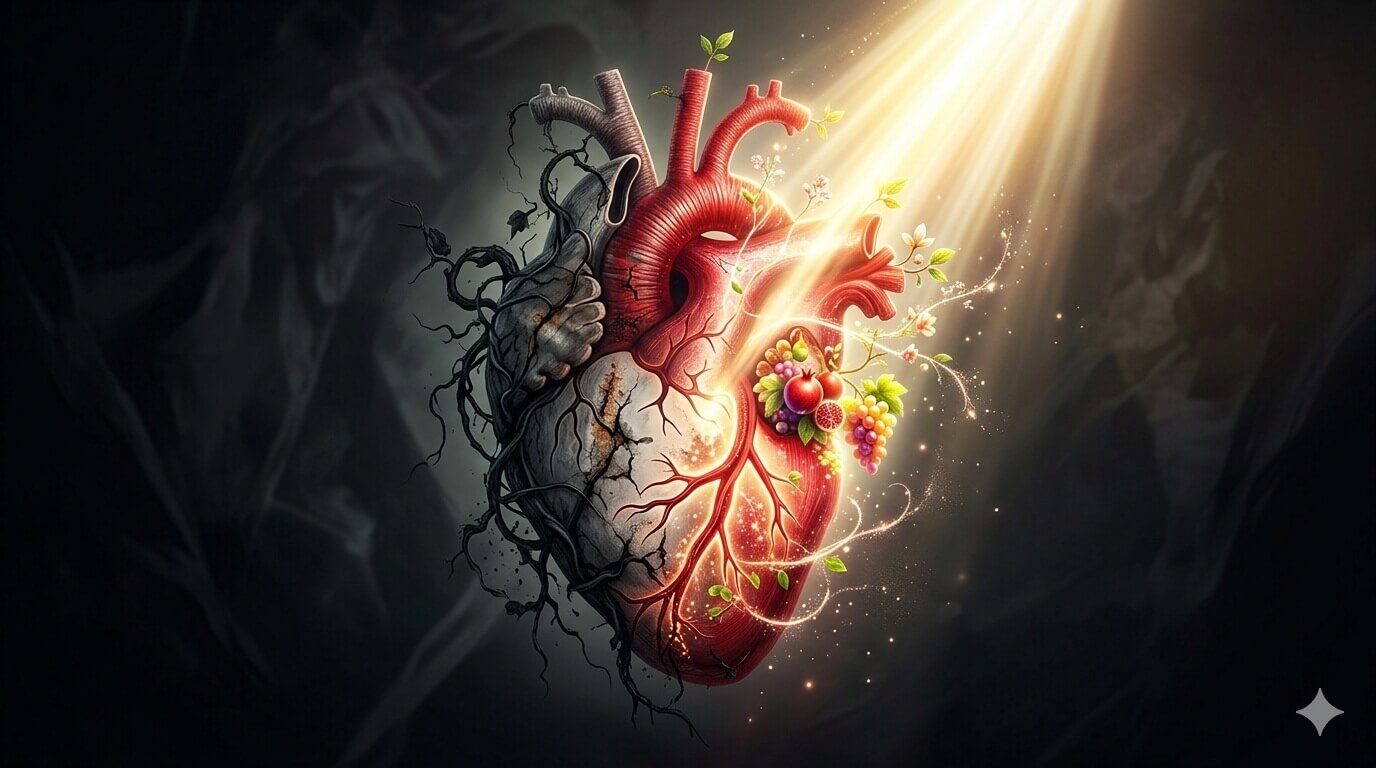
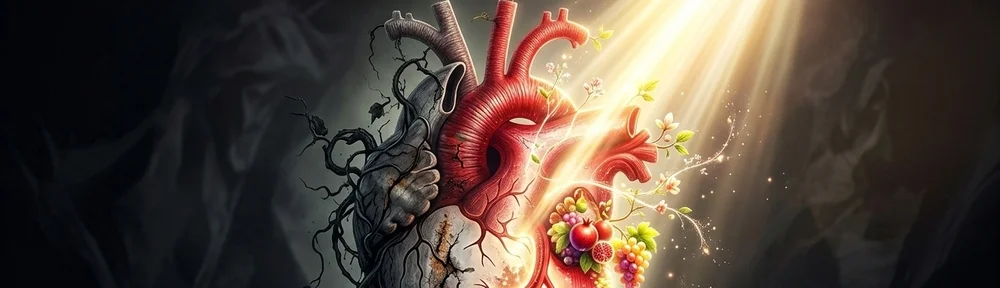
Illustration generated by Gemini: „Write a prompt and generate the image of an anatomic heart to illustrate Romans 8:13. Spirit is illustrated by light, life, fruit; flesh is illustrated by death, decay, subtly going through the entire heart. No text. –ar 16:9“
Über die Jahre habe ich einige Bücher über das Thema Berufung gelesen.
Es bleibt ein Paradox: Einerseits ist es Gottes Problem. Schließlich gibt er den „Ruf“ in der Berufung und hilft uns auch, diese Richtung zu verstehen (Philipper 2,13). Andererseits gibt uns Gott dabei viel Spielraum für Kreativität, wie wir diese Berufung ausfüllen können. Darum ist der Prozess, seine Berufung zu entdecken und nach und nach mehr auszufüllen, immer eine Entdeckungsreise.
Diese Bücher finde ich absolut lesenswert und verändernd:
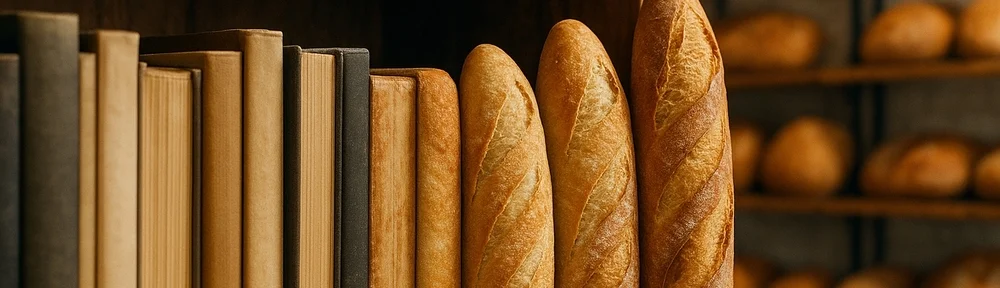
Bild: Generiert von Sora, Prompt: A photorealistic image. On the left, there are books on a bookshelf, book titles are not readable. On the right, there are breadloaves standing vertically on the shelf. The books are slowly, gradually morphing into loaves from left ot right. Background baker’s shop.

Lieber Vater im Himmel,
wir reden gerade viel darüber dass du kommst. Dass deine Liebe auf die Erde kommt: unscheinbar, anfassbar, real, menschlich.
Du hat Jesus gesandt, um deine Liebe in der Welt konkret erlebbar zu machen. Und nun bin ich auch ein Vater. Und ich habe das Gefühl, bei meinem Sohn ist es ähnlich: du hast mich gesandt, damit deine Liebe für ihn erlebbar wird – anfassbar, konkret, alltäglich.
Du hast es dir so ausgedacht: Am Anfang ist ein Baby einfach von seiner Mutter abhängig. Ohne die Fürsorge und Liebe der Mutter würde es sterben, selbst wenn es genug zu essen bekommt. Weil es bei dir eben auch so ist: ohne deine Liebe jeden Tag würden wir nicht leben.
Eine Mutter fällt es recht leicht, alles dafür aufzugeben, damit es ihren Kindern gut geht. Oft denkt sie noch nicht einmal darüber nach – sie spürt das Bedürfnis des Babys und reagiert darauf. Und damit bestätigt sie die Bindung zwischen ihr und ihrem Kind. Vater, geht es dir auch so mit mir? Wie geht es dir, wenn ich leide? Was fühlst du, wenn es mir nicht gut geht, aber ich mir auch nicht helfen lassen möchte? Dein Bund mit uns ist noch viel bedingungsloser.
Okay. Du hast mich also gesandt, deine Vaterliebe für meinen Sohn sichtbar zu machen. Ähm … bist du dir sicher dass du dir dafür die richtige Person ausgesucht hast? So richtig gut kann ich das nämlich nicht. Klar, ich gebe mir Mühe …
Aber du kannst das mit dem Lieben doch viel besser als ich! Warum gibst du mir diese riesige Verantwortung? Er wird denken, dass deine Liebe zu ihm genauso funktioniert wie meine Liebe zu ihm. Sein Vaterbild wird sein Gottesbild. Das kann doch nur Missverständnisse hervorbringen! Du bist ein guter Vater und ich bin … nun ja, ein Vater mit Schwächen und Fehlern.
Du siehst mich als guten Vater. Du hast es mir zugesprochen, noch bevor ich verheiratet war – ehrlich gesagt hat mich das etwas verstört. So ähnlich muss sich Gideon gefühlt haben, als du ihn „mutigen Held“ nanntest. Siehst du mich mit dem Blick der Liebe? Siehst du das Gute in mir, ermutigst mich und siehst über meine Fehler großzügig hinweg? Ach so. Du bist richtig geduldig mit mir. Wie machst du das bloß?!
Also gut. Ich will deine Liebe an meinen Sohn weitergeben, jeden Tag. Ich will ihm in die Augen sehen und mich zum Spielen vor ihn setzen. Ich will ihn immer wieder Grenzen zeigen, sinnvolle Konsequenzen finden und Dinge reparieren, die er selbst noch nicht reparieren kann. Und … ich will jeden Tag bei dir Liebe abholen, für mich und für ihn. Einmal volltanken, bitte!
Und dann, nach und nach, wird er auch dich immer mehr kennenlernen. Ich will ihm von dir erzählen, wer du bist und wie gut du zu uns bist. Und … kannst du mir bitte immer wieder eine Bestätigung geben, dass ich auf dem richtigen Weg bin? Oder mir zeigen, wo ich abbiegen soll?
Immanuel – Du bist mit uns, Schritt für Schritt. Und wir sind die einzigen Briefe über dich, die unsere Babies lesen können. Hilf uns, unsere Worte weise zu wählen.

Image generated with Sora, Prompt: Close-up shot of an old wooden desk – rich texture and visible grain. On the desk lies aged parchment with softly curled edges, handwritten text arranged like a classic love letter – elegant, flowing ink script. A feather quill rests beside a small inkwell, ink slightly glossy. A deep red wax seal with a heart symbol is stamped on the parchment. Dark but warm lighting – candlelight glow, soft shadows, cozy and intimate atmosphere, cinematic, high detail, shallow depth of field, timeless and romantic mood. The letter reads:“My dear child, You are my one and only Son. I am there for you. I know, life is not easy sometimes. You are hurt and frustrated, and sometimes I feel helpless because I know I can’t help you. I can only hold you tight and let you know: I am there for you. I won’t forsake you!“

Schon bald, als wir nach der Geburt unseres Sohnes aus dem Krankenhaus zurückkamen, merkten wir, dass wir unser Zeitmanagement komplett neu denken müssen: Carpe Minutam.
Ihr kennt ja Carpe Diem, „Nutze den Tag“. Mit Baby wird das zu „Nutze die Minute, denn du weißt nicht, wann es wieder aufwacht!“ Ungestörte Zeit wurde zum Luxus-Gut – sollen wir jetzt Aufräumen, Organisieren, oder uns selbst Ausruhen? Oft erst einmal ausruhen.
Es dauerte eine Weile, bis wir unseren Haushalt wieder einigermaßen auf die Reihe bekommen haben – was für ein Geschenk, dass es Elternzeit gibt! Erst einmal mussten wir unseren Lebensstil umkrempeln, und das als zwei introvertierte Hochsensible, die über Jahre Bewältigungs-Strategien entwickelt haben, die nun von heute auf morgen teilweise hinfällig wurden. Und dann auch noch hohe Erwartungen daran haben, wie viel Aufmerksamkeit und Liebe wir unserem Kind geben wollen.
Auch der Baby-Führerschein-Kurs konnte uns nicht wirklich auf das vorbereiten, was uns erwartete. Es war ein bisschen wie „rein theoretisch“ über das Schwimmen-Lernen reden – nicht verkehrt, aber Ausprobieren und Machen ist unerlässlich. Unser erster Aha-Moment in diesem Prozess war zu realisieren, wie wichtig es für uns ist, Humor und Zuversicht und Frieden zu bewahren. Es gibt Hoffnung: Unser Papa im Himmel hat uns dieses Baby anvertraut, er war der Meinung, dass wir dazu bereit waren. Also versuchen wir weiter, in diese Schuhe reinzuwachsen.
Erst ein Jahr nach der Geburt ließ das Gefühl von kurz-vor-der-kompletten-Überforderung-stehen nach. Eltern werden war das Herausforderndste, was wir bisher erlebt haben, dabei gibt es Eltern die noch viel mehr Herausforderungen bewältigen müssen – wie Alleinerziehende das hinkriegen, können wir uns nicht vorstellen. Aber wir wissen auch, dass wir bei weiteren Kindern in Vielem gelassener mit Situationen umgehen können. Einfach, weil man es schon einmal geschafft hat.
Bis dahin nutzen wir die Minuten, die Gott uns schenkt.